
Hatred as a Moral Code
The inevitable collapse of societies that define people by who they despise.

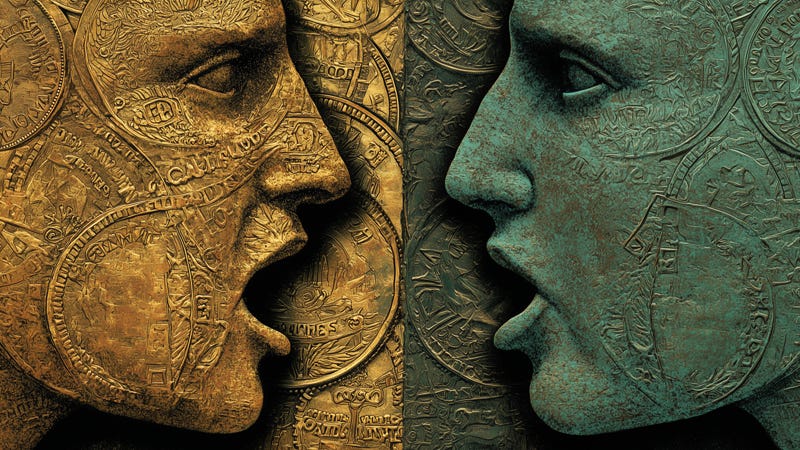
What happens to a nation when morality is no longer rooted in principle, but in hatred of the other side?
That’s the question staring us in the face today. Right now, across the Western World, unlike anything most of us have seen in our lifetimes.
Politics has become less about vision and more about vengeance. It stopped being about building and became about burning. And if we’re honest, this shift tells us more about cultural decline than any headline ever could.
When your moral worth is judged by who you despise, your world shrinks to the size of your enemy. Complex issues become shallow binaries. Wisdom, informed empathy, and restraint are discarded for the cheap satisfaction of purity tests. Doling out diagnoses to avoid engagement becomes routine.
Tribal regression thrives on division. It destroys trust in the name of harmony. It forbids neutrality in the name of safety. The result is not moral strength, but moral abandon masquerading as righteousness.
We are witnessing a tragic fall into a fearful and mystical world. So many people have no choice but to focus on subsistence, while raw displays of power silence the voices that challenge orthodoxies. And on September 10, 2025, this manifested as the assassination, the murder, of Charlie Kirk.
Here are five foundational principles that Western Civilization desperately needs to reestablish. With them, we can set a bold new course forward.
The Predictable Decay of Tribal Thinking
This tribalistic mindset poisons society in four clear ways. Echo Chambers and Information Silos trap people in closed loops where only their beliefs are reinforced. Dehumanization strips opponents of their humanity, making cruelty easier to justify.
Loss of Nuance reduces every issue to black-and-white terms, erasing the complexity of real life. And the inevitable result is Increased Conflict, where each side views the other as a mortal threat and retaliates in kind.
The Principle of Nuance:
It is wiser to embrace complexity and nuance than binary thinking or polarization.
Talking Past Each Other
Communication differences and societal assumptions deepen this breakdown. Cultural Context shapes what is seen as empathy or respect in one setting but aggression in another. Active listening skills are no longer taught effectively in school. Language Barriers create misinterpretations, even among people who technically speak the same tongue.
Socioeconomic Theories, which are linked to social mobility, drive assumptions about class, wealth, and education that block genuine understanding. But the labor theory of value central to Marxism has been empirically debunked by marginalist theories of value.
Each of these fuels misperception, creating more friction in an already divided society. So, it pays to be aware of other people’s theoretical assumptions. Do they bare fruit? For whom?
The Principle of Theories:
It is wiser to judge ideas by their practical consequences and effects on your life, rather than by abstract theories.
Divided by Megaphones
Add technology into the mix, and the cracks widen. Media and Technology expand our reach but strip away tone and non-verbal cues, replacing human connection with text on a screen. Miscommunication multiplies in this vacuum.
Algorithms amplify extremes, feeding people what they want to hear and confirming the worst about their opponents. What should be tools for connection often serve as accelerants for hostility.
The Principle of Algorithms:
It is wise to keep in mind the pervasive nature of user targeting and content recommendation algorithms on the internet, because they significantly influence how information spreads and is consumed.
When Hatred Meets Miscommunication
The common thread is this: when morality is defined by hostility, it fuses with communication breakdowns and hardens divisions. Every misstep becomes evidence of bad faith. Every assumption becomes another reason to retreat into tribal loyalty.
It’s a cycle. And because Political Ideology filters how people see reality, the cycle reinforces itself endlessly.
The Principle of Hostility Cycles:
It is wise to prevent hostility by encouraging open dialogue and critical thinking, so that it breaks the cycle of imitation and rivalry while fostering genuine understanding rather than reactive conflict.
Strength Over Slogans
Breaking this cycle requires strength, not sentimentality. It demands the courage to engage when it’s easier to dismiss, the discipline to hold onto principles without turning them into blunt weapons, and the willingness to wrestle with complexity instead of clinging to slogans.
A person doesn’t prove conviction by hating louder—he proves it by living out his values with integrity.
The Principle of Ethical Conviction:
It is wiser to conduct yourself as a fine example of your ethical convictions by firmly upholding them than to hide behind words that merely sound virtuous, even in a society of cynics.
Civilization or Collapse
We face the choice of two different paths. If we fail to take the right one, permanent hostility will become the norm. Indeed, some have expected this moment to come since the invention of cable television in the 1980s.
But if we succeed in bringing back these principles, we can recover something far greater than a political victory! We can restore our capacity to treat one another not as pathological agents, but as human beings.
That is not weakness. It is the very foundation of civilization itself.